


Revenues do not appear on the balance sheet but are listed as part of the income statement. Some accounting professionals use contra revenue accounts to adjust gross receipts and calculate net revenue. Contra revenue carries a debit balance and may be listed as sales discounts, sales returns, or sales allowances. Contra assets are an important bookkeeping concept that helps balance a business’s books. In this article, we look closely at contra assets and the different types of contra accounts you may see on financial statements.
What Are Contra Accounts? Definition, Types, and Examples
They are also accessible via the general ledger, trial balance, and some cash flow statements. Contra accounts with small balances may not appear separately, but may be combined with the asset account, subtracting the contra balance from the asset balance. Certified Public Accountant Contra accounts that are combined into the asset value and not shown as separate line items are noted in the footnotes of the balance sheet. We can assess your current system, implement the necessary controls for all your contra asset accounts, and provide you with clear, compliant financials.
- There can be hidden value in stocks that have a lot of fully depreciated buildings.
- This mechanism is crucial for accurate financial statement presentation under Generally Accepted Accounting Principles (GAAP).
- The allowance for doubtful accounts is estimated based on the company’s management, and it’s often calculated as a percentage of sales or using the accounts receivable aging method.
- These considerations are vital for maintaining the integrity of financial reporting.
- It will debit Accounts Receivable for $100,000 and will credit Sales for $100,000.
- The future of contra asset accounting is poised to evolve in tandem with the advancements in technology and changes in regulatory frameworks.
- Namely, within a ledger, each account is intended to contain transactions and balances of a similar type only.
Diving into Different Types of Contra Accounts

Both depreciation and bad debts require systematic and rational estimation methods to appropriately adjust the asset values. Contra-asset accounts are often confused with other financial adjustments, such as contra-liability or contra-revenue accounts. Despite their apparent similarities, each has a specific what is a contra asset function in financial reporting. Businesses must know these differences to guarantee accurate financial reporting and avoid misclassification errors. Contra asset accounts show up under assets on the balance sheet but lower the value of related asset accounts.
Contra Revenue Account
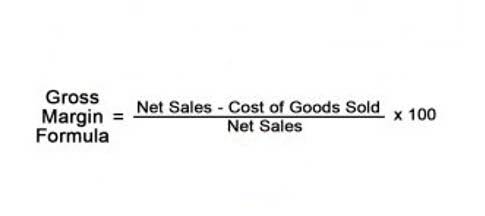
Income statements also use contra accounts to show deductions from gross revenue. Sales returns, allowances, and discounts appear as separate line items, making net revenue more transparent than if only a final number were reported. Net book value is the amount you get when you subtract a contra account balance from its parent account.
Contra account: Definition, types, and examples
- In other words, contra accounts are used to reduce normal accounts on the balance sheet.
- These contra assets in the balance sheet are reflected with the asset accounts they are paired with to equalize the balance.
- For example, if a company owns equipment worth $100,000, wear and tear over time reduces its value.
- It’s not just about compliance; it’s about making informed decisions that will impact the company’s financial future.
The calculated bad debts expense affects the income statement by recognizing an expense related to receivables that are unlikely to be collected. Concurrently, an allowance for doubtful accounts is established or adjusted, which is a contra-asset account that offsets the accounts receivable balance on the balance sheet. These methods affect the depreciation expense reported on the income statement and accumulated depreciation, which is the contra-asset account used to reduce the carrying amount of the fixed assets. These professionals ensure that records accurately reflect a business’s financial health.
Example of a Contra Asset Account
- This loss of value is captured through depreciation expense, which is a systematic allocation of the cost of the asset over its useful life.
- This means that instead of showing the full value of the asset, you show the asset value minus the depreciation.
- Master the fundamentals of financial accounting with our Accounting for Financial Analysts Course.
- By the end of the first-year machinery, the balance will be $100,000, and accumulated depreciation will show $20,000.
- Such accurate record-keeping is vital for maintaining the integrity of your financial reports.
- Contra accounts improve financial reporting by showing both original and adjusted balances side by side.
Examples of revenue contra accounts are Sales Discounts, Returns and Allowances. Contra asset accounts are essential for providing a realistic valuation of a company’s assets. They are primarily used to account for the depreciation, depletion, or obsolescence of the company’s assets, which helps to present a more accurate financial position.
Streamline your accounting and save time
A contra asset is a negative asset account that offsets the asset account with which it is paired. The purpose of a contra asset account is to store a reserve that reduces the balance in the paired account. By stating this information separately in a contra asset account, a user of financial information can see the extent to which a paired https://www.bliskosc.eu/top-9-accounts-payable-ap-software-solutions/ asset should be reduced.

Contra revenue accounts
For instance, if you have a “Cash” account showing $10,000, a corresponding contra asset like “Accumulated Depreciation” would show $(1,500), maintaining that balance. A contra asset account can be created to better understand your business financials. Allowance for doubtful accounts is a contra asset account used to create an allowance for customers who are not expected to pay the money owed for purchased goods or services.
Last modified: January 13, 2026
